
After the trial balances have been imported from source systems, for all the subsidiaries and affiliates, we can trigger the automated process of SAP data preparation for consolidation purposes. In this brief blog, I will describe the few steps that are automated by the system to ensure that the data is comprehensive and will be ready for consolidation.
Ensure the trial balances from periodic or YTD sources balance when you upload them. Total assets, liabilities, equity, revenues, and expenses must net to zero. Always follow financial reporting rules.
This step sets the essential rules for consolidation. You can extend the automation with additional steps.
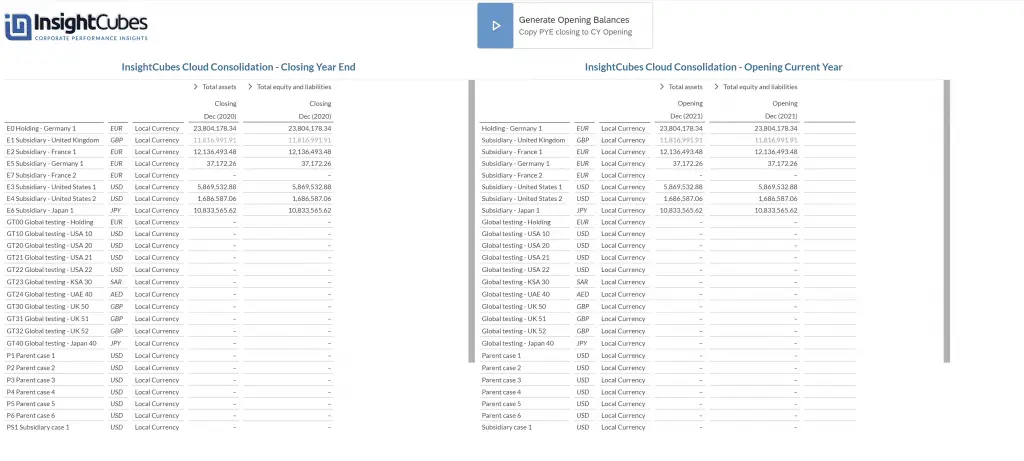
Generating Opening Balances
The first activity that this process will conduct is to generate the opening balance for each account in the balance sheet, by taking the YE closing balance of the prior year and posting it on the opening flow of this year. Perform this activity when you upload YTD values from the source system and store the data as YTD in the measure.
If the source system provides periodic values, convert them to YTD. Periodic or YTD reporting is identified automatically by the system.
Harmonizing Data Across Companies
Harmonizing the data is a required step, regardless of whether we store it as YTD or Periodic. The rule ensures consistency across all companies: if the storage method is YTD and some companies report in Periodic, the system converts and stores the data as YTD. Conversely, if the storage method is Periodic and a company provides YTD data, the system converts it to Periodic.
Next, the system sets opening balances. Periodic openings use the prior month’s closing, while YTD openings use the prior year’s closing.
Regardless of storage, you can report in YTD, Periodic, QTD, or TTM
Note: For this blog, assume all companies store their Trial Balance values as YTD. (Note: a YTD Balance Sheet with periodic Profit and Loss is possible and has a native handling method, but we will not cover it here.)
Calculating Net Income and Retained Earnings
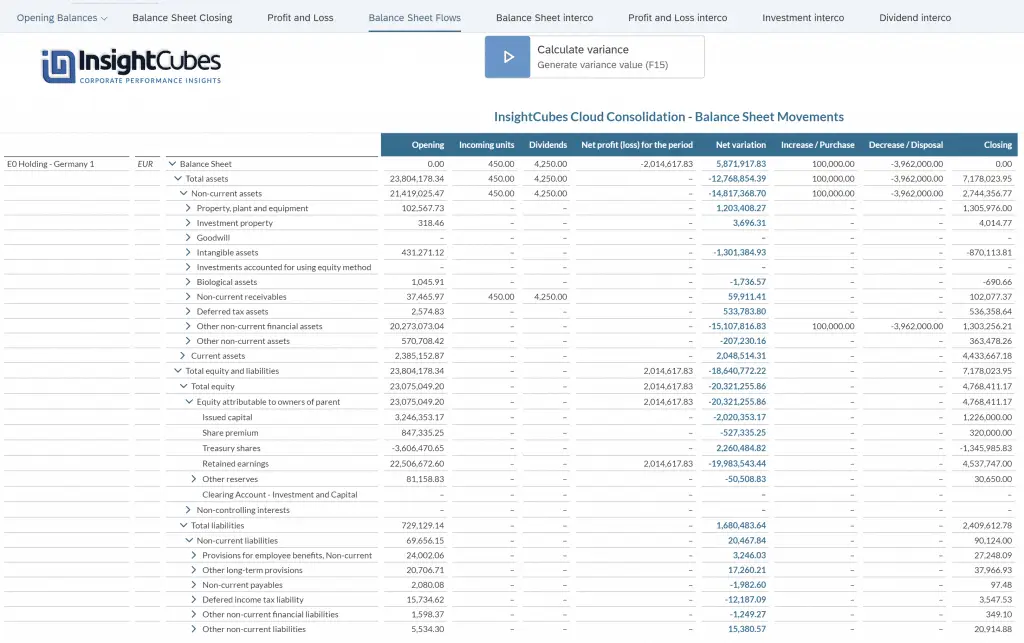
After generating the opening balances per account, the system will calculate the net income per entity and allocate the value to the retained earnings flow named net Income for the period. Alternatively, allocate the value to the current year’s earnings in the Balance Sheet, which the system adds to the opening retained earnings at year-end. These were the financial reporting requirements for some companies that adopted the solution; a minor deviation requiring a line or so of additional code.
Calculating Variances
The last action that the system will carry will be the calculation of the variance between opening and movement with the closing. The system stores the difference in a specific flow for each Balance Sheet account. The system cannot calculate these values “in memory” because the currency translation and consolidation logic must process them, as explained in later blogs.
Now, you have learned the SAP Data Preparation process for our designer.